Medieval life was shaped by strict social hierarchies, religious belief, and the demands of survival in an agrarian world. From peasants working the land to nobles governing estates and monks preserving knowledge, everyday existence in the Middle Ages followed patterns defined by class, duty, and tradition. Although life was often harsh and unpredictable, it was also structured, communal, and deeply connected to the land, the seasons, and faith.
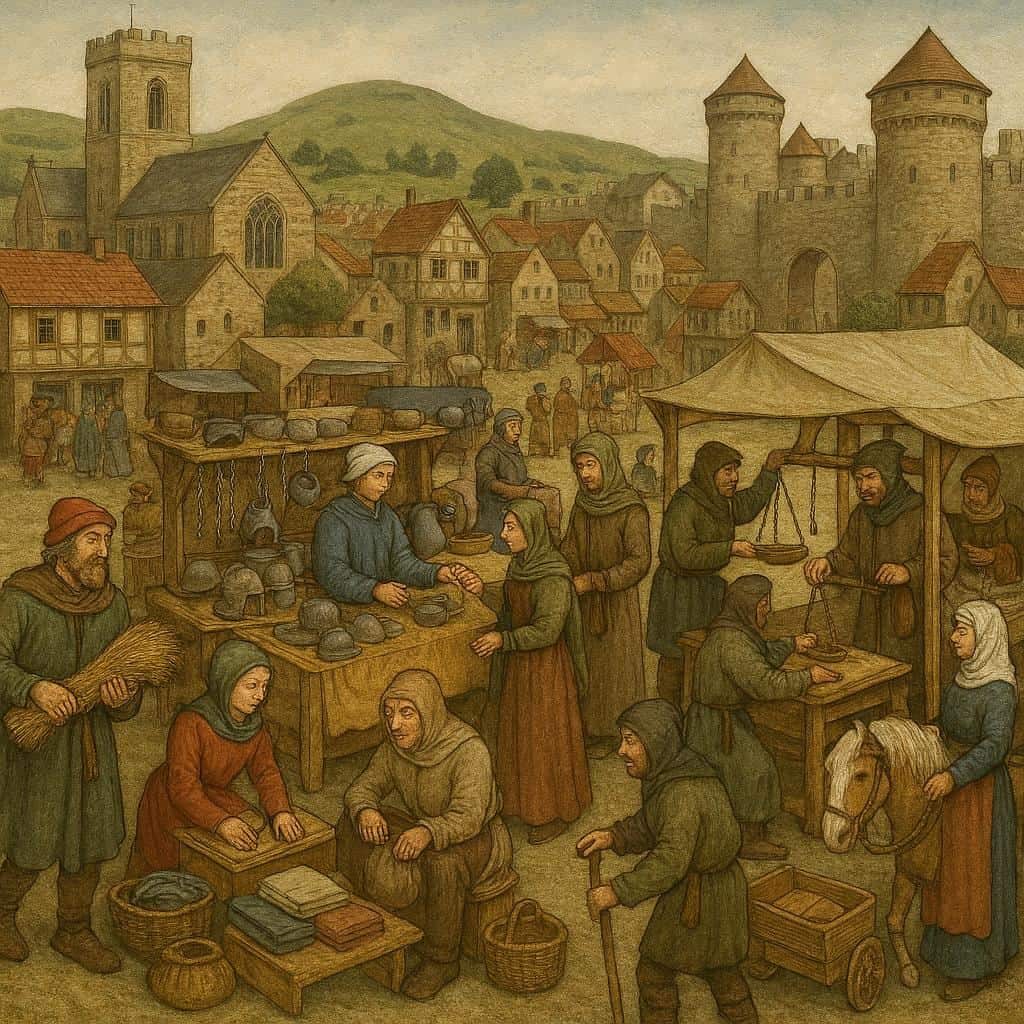
Understanding daily life in medieval Europe reveals how most people lived, worked, worshipped, and interacted within a society where one’s birth largely determined one’s future.
🏰 Click-to-Reveal: Key Aspects of Medieval Life
Feudal Society
Medieval life was organised through feudalism, where land ownership defined power and obligations between kings, nobles, knights, and peasants.
Peasant Life
Most people lived as peasants, working long hours in agriculture, paying rents and labour services to their lords.
Noble Responsibilities
Nobles managed estates, provided military service, and upheld justice while maintaining loyalty to higher-ranking lords.
Religion
Christian belief shaped medieval life, influencing law, education, daily routines, and social values.
Town Life
Towns offered trade, crafts, and limited social mobility, but were crowded and often unsanitary.
Village Communities
Villages relied on cooperation, seasonal labour, and shared customs to survive.
Feudalism and the Structure of Medieval Life
At the heart of medieval life was feudalism, a hierarchical system that organised land ownership, political authority, and military service. While feudal arrangements varied by region, the system broadly linked kings, nobles, knights, and peasants through obligations and loyalty.
Under the feudal system, the king granted land to powerful nobles in return for military support. These nobles, in turn, distributed land to lesser nobles and knights. In exchange, knights provided armed service, while peasants supplied labour and food.
This system ensured:
- Political stability in a fragmented world
- A steady supply of soldiers for warfare
- Agricultural production to sustain society
🏡 Manorialism and Rural Medieval Life
Closely connected to feudalism was manorialism, the economic foundation of medieval life. Most people lived on manor estates, which functioned as largely self-sufficient rural communities controlled by a local lord.
A typical medieval manor included:
- A manor house or small castle
- Peasant cottages
- Open fields for growing crops
- Pasture land for livestock
- A church or chapel serving the local community
The lord of the manor oversaw local justice, collected rents, and controlled land use. In return, he provided protection to the peasants who lived and worked on the estate.
Medieval Peasants and Serfs
The majority of the population in medieval life consisted of peasants, including serfs and freemen.
Serfs
- Legally tied to the land
- Owed labour services, rents, and taxes
- Could not freely leave the manor
Freemen
- Not bound to the land
- Often paid rent instead of labour
- Had limited legal rights and mobility
Daily life for peasants was physically demanding. Work followed the agricultural calendar and included ploughing, sowing, harvesting, tending animals, and repairing tools.
Typical peasant food included:
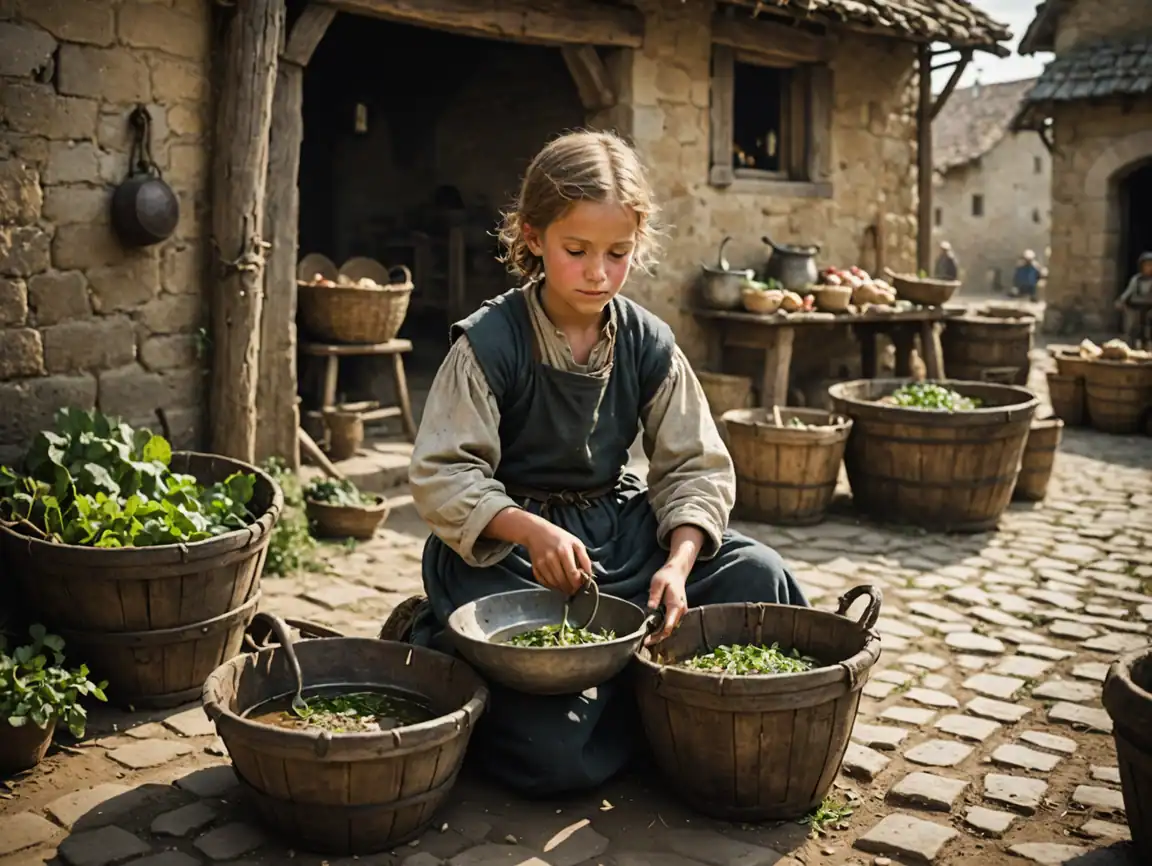
- Pottage (vegetable stew)
- Bread made from barley or rye
- Seasonal vegetables
- Occasionally cheese or meat
Despite hardship, medieval peasant life was not constant misery. Festivals, village gatherings, and holy days provided regular breaks from labour.

Life of the Medieval Nobility
Medieval life for the nobility was far more comfortable, though it carried heavy responsibilities. Nobles managed estates, collected rents, administered justice, and fulfilled military obligations to their superiors.
Daily activities of nobles often included:
- Overseeing land and servants
- Attending court or councils
- Training for warfare
- Hosting feasts and social events
Noble households were centres of power, culture, and hospitality. Meals were elaborate, entertainment included music and storytelling, and education was valued, especially for heirs.
👩 Medieval Women and Daily Life
The experience of medieval life for women varied greatly depending on social class, location, and family status. Despite limited legal recognition, women’s work was essential to the survival of medieval society.
🏰 Noblewomen
- Managed households and estates
- Supervised servants
- Acted as regents during absences
- Occasionally engaged in trade or politics
🏙️ Townswomen
- Worked in family businesses
- Brewed ale or wove cloth
- Traded goods in local markets
- Some joined craft guilds
🌾 Peasant Women
- Worked in fields during busy seasons
- Managed food preparation and childcare
- Tended animals and household tasks
Women’s labour was fundamental to medieval life, even though it was rarely recognised in official records or legal documents.
Children in Medieval Life
Children were active contributors to medieval life from an early age.
- Peasant children helped with farming and animals
- Town children became apprentices
- Noble boys trained for knighthood
- Noble girls learned household management
Formal schooling was limited, but children learned practical skills through work, observation, and oral tradition.
Monks, Monasteries, and Religious Life
Religion dominated medieval life, and monasteries played a vital role in education and culture.
Monks lived according to strict routines that included:
- Prayer and worship
- Reading and copying manuscripts
- Teaching and record-keeping
Monasteries preserved classical knowledge, developed agriculture, and provided charity. Without them, much of medieval learning would have been lost.

🏙️ Medieval Towns and Urban Life
Not all medieval life was rural. Medieval towns developed around markets, rivers, crossroads, and castles, growing into important centres of trade, craftsmanship, and economic activity.
- Narrow streets and crowded housing
- Busy workshops and open marketplaces
- Craft guilds regulating trades and apprenticeships
- Greater social mobility than rural areas
While towns offered opportunity and independence, urban life was often unsanitary. Poor waste disposal, overcrowding, and limited clean water contributed to the frequent spread of disease.
Village Life in the Middle Ages
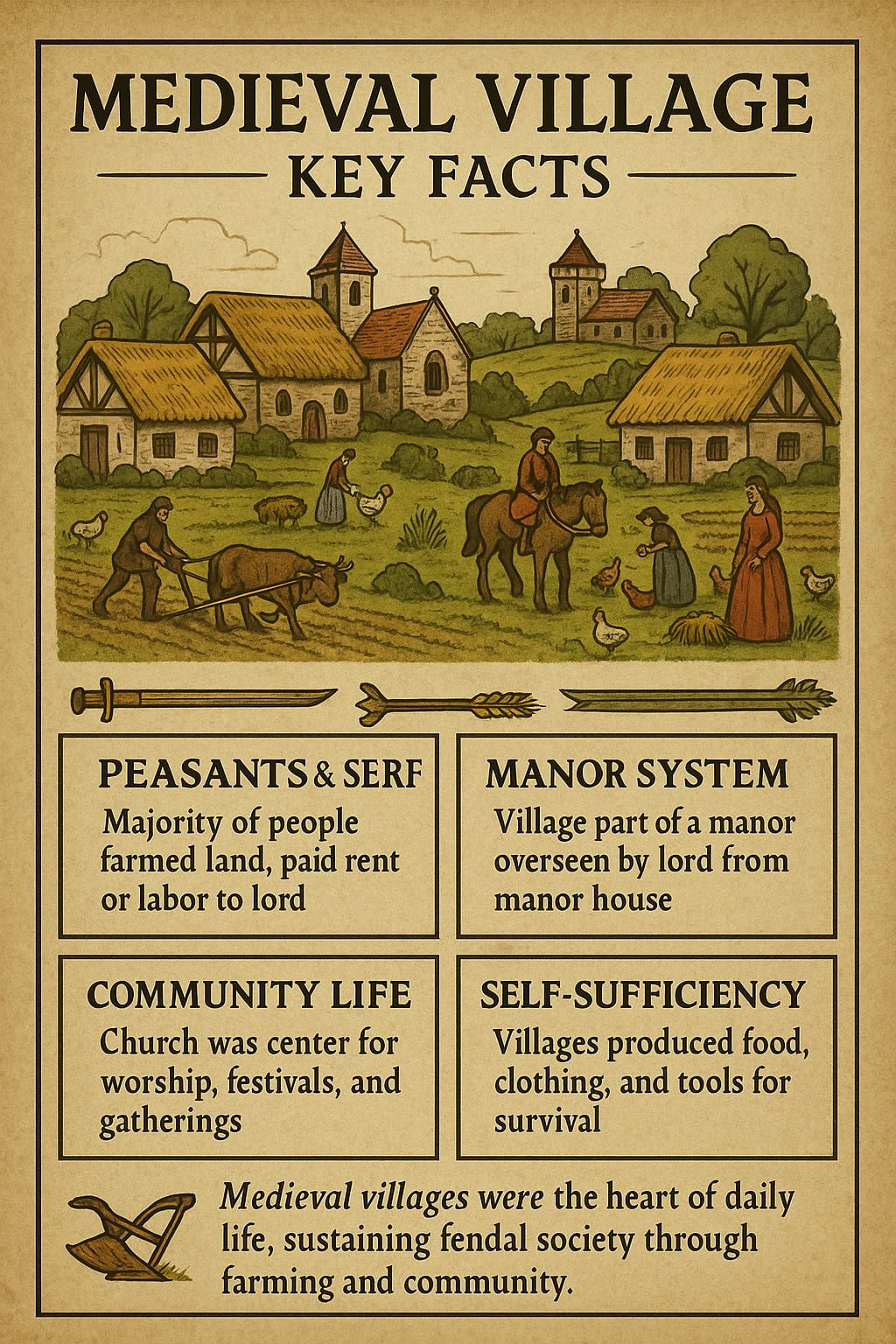
Villages were the heart of rural medieval life. Communities were close-knit, and cooperation was essential for survival.
Village activities included:
- Farming and livestock care
- Spinning wool and weaving
- Candle-making and tool repair
- Religious observance
Life followed the rhythm of seasons and the church calendar, reinforcing tradition and social order.
Conclusion: Understanding Medieval Life
Medieval life was complex, structured, and deeply interconnected. While living conditions were harsh by modern standards, medieval society functioned through cooperation, obligation, and tradition. Peasants, nobles, clergy, and townspeople each played essential roles in sustaining the world of the Middle Ages.
By examining daily life in medieval Europe, we gain insight into how ordinary people lived, worked, and found meaning in a world shaped by land, faith, and community — foundations that would later influence the modern world.
📌 Key Takeaways: Medieval Life
- Medieval life was shaped by feudalism, religion, and a strict social hierarchy.
- Most people lived in rural communities under the system of manorialism.
- Peasants and serfs formed the majority of the population and worked agricultural land.
- Medieval towns grew as centres of trade, craft production, and social mobility.
- Women played essential roles in households, agriculture, and urban economies.
- Nobles and knights governed land, fought wars, and upheld feudal obligations.
- Religion influenced daily routines, education, law, and moral beliefs.
- Life in the Middle Ages was demanding but structured around community, tradition, and survival.
❓ Medieval Life – Frequently Asked Questions
What was medieval life like for most people?
Most people lived as peasants, working in agriculture under the authority of a lord.
How did feudalism shape medieval life?
Feudalism structured land ownership, military service, and political loyalty.
Did medieval people have free time?
Yes. Religious festivals, feast days, and seasonal breaks provided time for rest and celebration.
What did medieval peasants eat?
Pottage, bread, vegetables, and occasional dairy or meat.
Were women active in medieval society?
Yes. Women worked in households, fields, trade, and estate management.
What role did religion play?
Religion influenced law, morality, education, and daily routines.
Could people move between classes?
Movement was rare but more possible in towns through trade and apprenticeship.
🧠 Medieval Life Knowledge Quiz
📜 Glossary of Medieval Life Terms
A hierarchical system where land was exchanged for loyalty and military service.
The economic system based on self-sufficient manor estates.
A rural estate controlled by a lord, including farmland and peasant homes.
A peasant legally bound to the land and obligated to work for the lord.
A noble who pledged loyalty to a higher lord in return for land.
Land granted by a lord in exchange for service and allegiance.
The majority class who worked the land and produced food.
Church officials including monks, priests, and bishops.
A thick stew of grains and vegetables eaten by peasants.
An organisation controlling trade skills in medieval towns.